
I shall begin by dismissing the grand concept of TAO out of hand. For me, at least, it defies discussion, and therefore should not even be accorded the dignity of “concept.” It can be spoken of only in metaphors: a womb, a boundless matrix and therefore no matrix, a cloud of non-constituents, an unexplained explanation which does not explain, a cosmic dung, nothing, everything, a four-sided triangle, a gigantic glass of beer, a turtle. Let a reincarnate Chuang Chou [Zhuangzi] deal with the matter.
Edward Schafer, Pacing the Void -- T'ang Approaches to the Stars
Two weeks ago, I posted an excerpt about drunken Daoist immortals from the wonderful Li Bo Unkempt. A footnote to that anecdote led me to Kathlyn Liscomb’s Iconic Events Illuminating the Immortality of Li Bai. Another footnote in that article referenced Edward Schafer’s Pacing the Void. In the course of some my more abstruse rabbit-hole wanderings I have occasionally encountered citations to this volume’s lyrical authority on matters relating to medieval Daoism, but I’d never read it. Not knowing what better to do as a global trade war erupted this past week I decided it was finally time to remedy this error. I was rewarded immediately by the passage above. The Dao is a gigantic glass of beer! Yes.
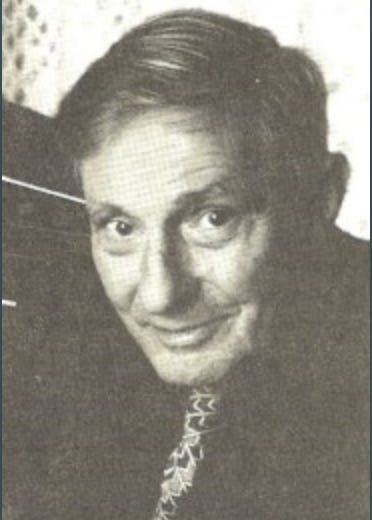
Schafer was a professor at UC Berkeley who retired in 1984, just a few years before I arrived in town. As I mulled his prose, I recalled previously being impressed by a memorial I’d read about him. I looked it up again, and yes, there it was, in the first paragraph.
“He was a world-renowned authority on medieval Chinese culture, an inspiring teacher, witty correspondent, fighter for political principle and gender equality…”
Political principle: In the early 1950s, Schafer was one of 18 UC Berkeley faculty members who were fired for refusing to sign a McCarthy-era loyalty oath.
As one of his students, the great art historian James Cahill, reminisced, Schafer was hardly alone at Berkeley in opposing the loyalty oath. But he recounted an interesting twist. With other eminent institutions eager to snap up faculty fired by Berkeley, the chair of Schafer’s department feared its complete destruction:
The Oriental Languages Department faculty, led by Peter Boodberg, decided that in order to keep the department strong and its teaching program going, only one of their number would refuse to sign, representing the others. Ed Schafer was the one who refused. The Department supported him with research grants and in other ways until the oath was struck down and he was reinstated.
Gender equity: “During the 1970s Ed began a campaign to bring academic women into fuller equality at Berkeley, working successfully to upgrade women he felt were unjustly classified as lecturers when their credential warranted appointments at professorial ranks. He also led a movement to break sex barriers at what then were sex-segregated dining clubs.”
In her own reminiscence, published in 2015, Schafer’s widow, Phyllis Brooks Schafer, provides more detail.
In the early 1970s my late husband, Edward Schafer, was Chair of the Budget Committee. Elizabeth Colson, our Emerita of the current year, was also on that committee and succeeded him as Chair in turn. Ed was always looking for ways to use this position to improve the lot of women on campus - often in subtle ways like conducting a re-examination of the status of all Lecturers on campus, several of whom (mostly women) were then raised to tenure-track positions. Elizabeth was an enthusiastic partner in these efforts. After the Faculty Club agreed to admit women as members in 1972, he wanted to “liberate” the all-male faculty dining clubs - Humanities Club, Kosmos Club, and the Arts Club. He and Elizabeth connived to do this. She went as his guest (the first woman ever!) to a Humanities Club dinner around 1974, and Ed put her up for membership. In those days black balls still existed, but who would dare being suspected of black-balling the Chair of the powerful Budget Committee? She was elected, and all the other dining clubs soon followed suit in admitting women. Another small step forward! And one that Elizabeth recalled gleefully in the address she gave at Ed’s memorial service in 1991.
Typically, when I end up spending a few hours following footnotes concerning medieval Daoist immortals and the historians who are obsessed with them, the following factors are in play: I don’t have an imminent deadline for bill-paying work and I am desperately trying to distract myself from the current state of the world. I am an expert at this: I release myself from to-do lists and narrative arcs and news headlines and just follow where the whim leads. Like Zhuangzi’s elderly swimmer who is at ease in the midst of turbulence because he gives himself up to the flow, I have no direction and no plan.
More often than not, a narrative arc plucks me out of water and sets me back in front of the keyboard. Because after just a few strokes downstream, there I was, emerging from the rapids into the now, transported without any friction at all from the eighth century to the twenty-first, cherishing and saluting the memory of a man who took tough stands in fraught political times and worked to better his world in meaningful ways, one small step forward after another. At a moment when we are taking giant steps backward in a myriad of ways, this unexpected detour delivered both solace and inspiration.
One last amusement: In a lovely memorial to Schafer written by another of his former students, David B. Honey, we learn that Schafer’s “concentration on the details of the medieval world, was… bent to a literary aim: students of Chinese literature should, he taught ‘strive to become familiar with the particular world of each writer – that is, his specific, real, local world in all of its rich details. Once they have achieved this knowledge they will be able to interpret their writer’s unique vision of that world, expressed in his well-chosen images, which in turn reflect his own special views of creation, astrology, sovereignty, duty, magic, food, heroism, and what not.’”
A bell rang when I read that passage. I recalled that when I first conceived the project that became this newsletter, roughly ten years ago, the first book I started reading as research was Food in Chinese Culture, edited by K. C. Chang. The volume consists of essays focusing on the major Chinese dynasties, and of course, the article on the Tang dynasty is written by Edward Schafer. And it was in that essay that I encountered an anecdote that helped inspire the name of this newsletter.
During the Tang Dynasty, a story was told of a chef "who could chop so thinly that the slivers would blow up into a current of air. On one occasion, it is said, a pile of them formed into a storm, turned into butterflies, and flew away."
Thank you, Edward Schafer. Some day soon, I will surely raise a gigantic glass of beer in your memory, while chanting some appropriate lines from Li Bai.
This morning I have drunk the elixir. I’m freed from worldly feelings,
body-mind in harmony. For the first time I am complete in Dao.
In the distance an immortal in the colored clouds,
a lotus in his hand, he’s off to pay homage at the Jade Palace.
We’ll tryst in the boundless unknown,
and Lu the Rambler and I will meet and roam Great Clarity together.
From Li Bo Unkempt, by Kidder Smith and Mike Tsai
This was a very cheering tale in a very stressful time. Let us clink glasses together.
What a wonderful tribute to the great Edward Schafer! I have a few newly printed Floating World editions of his work sitting happily on my coffee table, sofa armrests, and etc. I didn't know about his political stances -more credit to the man!